2026/01/23 10:54
こんにちは。ARTRAD KYOTOの安河内です。
日常で何気なく使っている「しかとする(無視する)」という言葉。 実はそのルーツが、江戸時代の「花札」にあるという説が有力なことをご存知でしょうか。
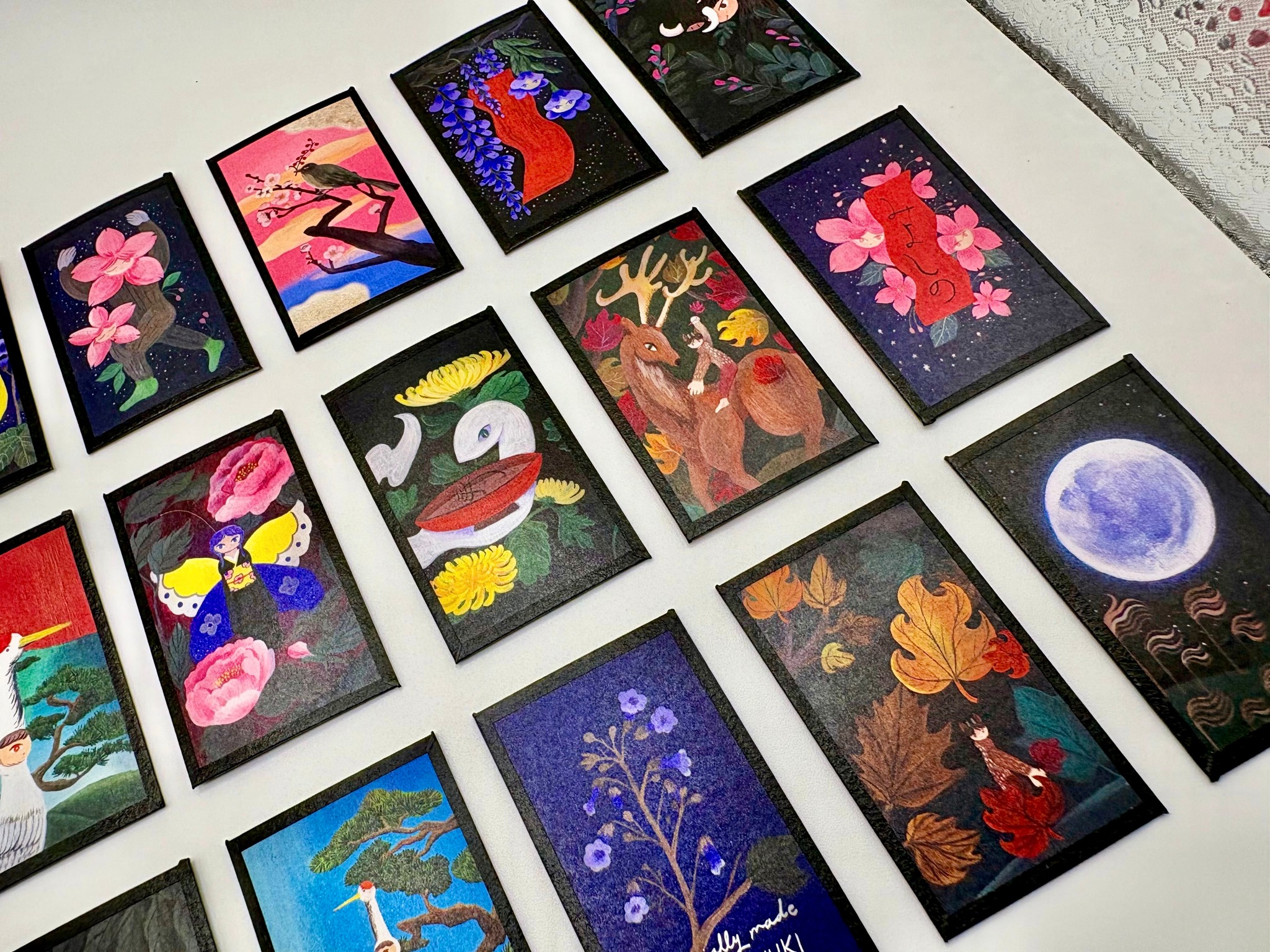
その正体は、10月の札である「紅葉に鹿」です。 この札に描かれた鹿をよく見てみると……プイッと横を向き、まるでこちらを無視しているような姿をしています。
「鹿(しか)」
10月の10点札であることから、十の読みである「十(とお)」
この二つが組み合わさり「しかとう」となり、転じて「しかと」という言葉が生まれたと言われています。当時の博徒(ギャンブルをする人たち)の間で使われていた隠語が、時代を超えて現代の私たちの言葉として生き続けている。そう思うと、1枚の札が少し違って見えてきませんか。
アート花札を手に取って、ぜひその「そっぽを向いた鹿」を探してみてください。
京都アート花札
Vol1 : The Origin of "Shikato"
Hello, I’m Hiroshi Yasukochi from ARTRAD KYOTO.
Did you know that the Japanese word "shikato" (meaning to ignore or shun someone), which we use casually in daily life, is widely believed to have its roots in the Edo-period card game "Hanafuda"?
The source is the October card, "Deer and Maple Leaves." If you look closely at the deer depicted on this card, you will see it turning its head away with a dismissive look, as if it is completely ignoring you.
"Shika" (Deer)
"To" (Ten, because it is the 10-point card of October)
It is said that these two words combined to form "shikatou," which eventually became "shikato." This slang, once used by the gamblers (bakuto) of that era, has survived through time and lives on in our modern language. Knowing this history, doesn't a single card start to look a little different?
Please pick up a set of our Art Hanafuda and see if you can find that "dismissive deer" for yourself.